The global skincare market continues to expand rapidly, with facial cleansers serving as the essential foundation of virtually every consumer daily routine. For beauty brands, indie founders, and e-commerce sellers, partnering with the right facial cleanser manufacturer is one of the most critical operational decisions you will make.
Whether you are launching a gentle amino acid cleanser, an exfoliating salicylic acid gel, or a luxury cleansing balm, your contract manufacturing partner determines your product’s safety, efficacy, regulatory compliance, and profit margins.
This guide provides a comprehensive overview of facial cleanser manufacturing models, formulation options, regulatory standards, and a step-by-step evaluation framework to help you select the ideal production partner.
1. Understanding Manufacturing Models: OEM, ODM, and Private Label
Before reaching out to a facial cleanser manufacturer, you must clarify which supply chain model aligns with your business strategy, timeline, and budget.
+-------------------------------------------------------------------------------+
|                             Manufacturing Models                              |
+--------------------------+--------------------------+-------------------------+
|        Private Label     |           OEM            |           ODM           |
|  Pre-formulated products |  Your custom formula,    |  Manufacturer develops  |
|  with custom branding.   |  their manufacturing.    |  formula + brand design.|
+--------------------------+--------------------------+-------------------------+
Private Label Facial Cleansers
Private labeling involves purchasing ready-to-market, pre-formulated cleanser chassis that the manufacturer keeps in stock. You customize the outer packaging, fragrance level, and brand labeling.
- Best for: Early-stage brands testing new markets or needing fast turnaround times (4–6 weeks).
- Pros: Lower minimum order quantities (MOQs), lower upfront testing costs, rapid market deployment.
- Cons: Limited formulation uniqueness and intellectual property (IP) ownership.
OEM (Original Equipment Manufacturer)
Under an OEM model, you supply your own proprietary formula, active ingredient ratios, and specific texture requirements. The manufacturer supplies the raw materials, compounding technology, laboratory infrastructure, and mass production capacity.
- Best for: Established beauty brands with internal R&D cosmetic chemists or unique ingredient patents.
- Pros: Total control over formula intellectual property and ingredient differentiation.
- Cons: Higher initial capital expenditure, longer R&D cycles, and higher MOQs.
ODM (Original Design Manufacturer)
ODM suppliers offer turn-key solutions. They handle everything from concept creation, custom formulation development, and stability testing to packaging sourcing and final assembly.
- Best for: Brands seeking unique custom formulations without in-house R&D teams.
- Pros: Complete customization, custom texture development, and reduced R&D overhead.
- Cons: Longer lead times during initial R&D; formula ownership terms must be clearly negotiated.
2. Cleanser Formulation Types and Technical Capabilities
A high-caliber facial cleanser manufacturer should possess diverse compounding capabilities across various cleanser textures, surfactant systems, and active delivery systems.
| Cleanser Format | Primary Surfactants / Actives | Skin Type Focus | Technical Manufacturing Challenges |
| Gel Cleansers | Amino Acid Surfactants (Sodium Cocoyl Glycinate), Amphoteric Surfactants | Oily, Combination, Acne-Prone | Achieving crystal clarity without phase separation or viscosity drops. |
| Cream & Milk Cleansers | Non-ionic Emulsifiers, Fatty Acids, Ceramides | Dry, Sensitive, Mature | Maintaining stable emulsion rheology across temperature fluctuations. |
| Foaming Cleansers | Coconut-derived Glucosides, Mild Sulfate Alternatives | Normal to Oily | Balancing instant flash foam density with skin barrier hydration. |
| Cleansing Oils & Balms | Plant Oils, Synthetic Esters, PEG-free Emulsifiers | All Skin Types (Double Cleanse) | Controlling melting point stability and self-emulsifying wash-off capability. |
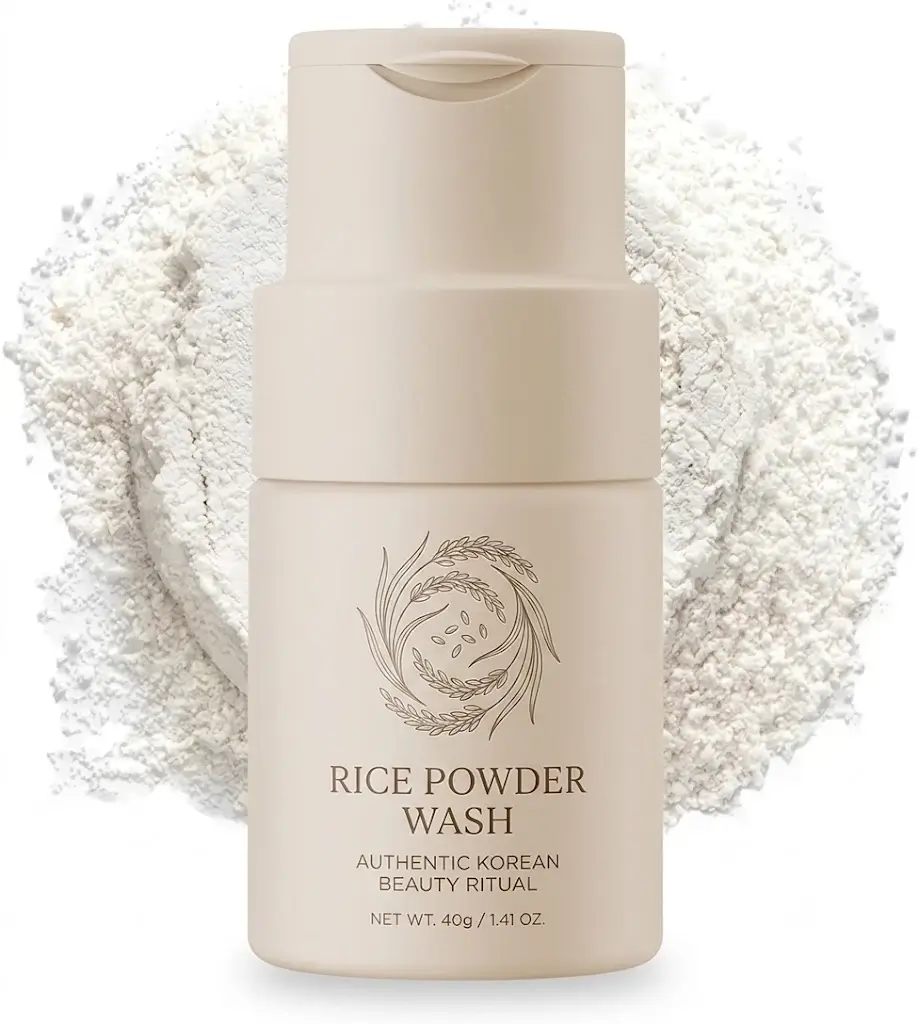
| Powder Cleansers | Microcrystalline Cellulose, Papain / Bromelain Enzymes | Sensitive, Eco-conscious | Moisture-free blending environment to prevent premature activation. |
Key Technical Factor: Skin Barrier Protection and pH Balance
Modern skin science emphasizes preserving the delicate acid mantle. A professional facial cleanser manufacturer must have precise automated pH adjustment controls to maintain a balanced range ($4.5\text{–}6.0$) for gentle cleansers, or specific acidic ranges ($3.5\text{–}4.5$) for active chemical exfoliants (AHAs/BHAs).
3. The Facial Cleanser Manufacturing Process: Step-by-Step
Understanding the production lifecycle helps you manage timelines and set realistic expectations for product rollouts.
Step 1: Lab-Scale Bench Sampling & R&D
The process begins in the laboratory. Cosmetic chemists create 100g to 500g bench samples based on your target brief (viscosity, foam profile, active percentage, scent). Expect 2–4 rounds of sample iteration.
Step 2: Preservative & Stability Testing
Before full-scale production, the custom formula must pass rigorous safety and durability evaluations:
- Accelerated Stability Testing: Storing samples at high temperatures (40°C–45°C) and varying humidity for 12 weeks to simulate a 2-to-3-year shelf life.
- Freeze-Thaw Cycles: Cycling the product between $-10^\circ\text{C}$ and $40^\circ\text{C}$ across multiple cycles to check for emulsion splitting or sedimentation.
- Challenge Testing (PET): Inoculating the formula with bacteria and mold to ensure the preservative system works effectively.
Step 3: Pilot Batch & Scale-Up
Scaling a formula from a 1kg laboratory beaker to a 1,000kg industrial stainless-steel vacuum homogenizing mixer requires careful calibration of shear rate, heating/cooling curves, and mixing speeds.
Step 4: Automated Filling & Packaging
Once the bulk liquid or paste passes quality control (QC), it is transferred to high-speed filling lines. Depending on your packaging choice (tubes, pump bottles, airless dispensers, jars), the manufacturer performs automated filling, air-flushing, heat-sealing, coding, and shrink-wrapping.
4. Essential Regulatory Compliance and Quality Standards
When vetting a facial cleanser manufacturer, compliance is non-negotiable. Selling non-compliant cosmetics can result in customs seizures, product recalls, or costly legal liabilities.
Crucial Compliance Tip: Verify that your manufacturing partner holds current, third-party audited certifications appropriate for your destination market before signing contracts.
- ISO 22716 / cGMP (Current Good Manufacturing Practices): The gold standard for cosmetic manufacturing, governing cleanroom air filtration, water purification systems, batch trace-ability, and hygiene protocols.
- FDA MoCRA Compliance (United States): Under the Modernization of Cosmetics Regulation Act, facilities must be registered with the U.S. FDA, maintain safety substantiation records, and adhere to strict adverse event reporting protocols.
- EU CPNP Notification (European Union): Requires a dedicated Product Information File (PIF) and a Cosmetic Product Safety Report (CPSR) authored by a qualified safety assessor.
- Clean & Ethical Certifications: Look for manufacturers capable of producing formulations compliant with Cruelty-Free (Leaping Bunny), Vegan, Halal, or RSPO (Roundtable on Sustainable Palm Oil) standards.
5. Strategic Checklist for Evaluating a Facial Cleanser Manufacturer
Use this scorecard when interviewing prospective contract manufacturing partners:
- R&D Expertise: Do they have in-house cosmetic chemists specialized in facial cleansing technology and mild surfactant physics?
- Minimum Order Quantities (MOQs): Does their batch size scale with your growth? (e.g., Starting at 1,000–3,000 units for private label vs. 5,000–10,000 units for custom OEM).
- Deionized Water Purification Systems: Cleansers consist of 60%–85% water. Ensure the factory utilizes multi-stage Reverse Osmosis (RO) + UV purification systems.
- Packaging Compatibility Testing: Will the manufacturer perform leak-proof testing, pump dosage testing, and container compatibility testing with your chosen packaging?
- Supply Chain Transparency: Do they provide clear Certificates of Analysis (CoA), Material Safety Data Sheets (MSDS), and origin documents for all raw ingredients?
Final Thoughts
Selecting the right facial cleanser manufacturer goes beyond finding the lowest cost per unit. It requires establishing a long-term strategic partnership built on formulation expertise, strict quality control, and scalable production capacity. By prioritizing compliance, testing rigors, and operational alignment, your brand can confidently launch high-performance facial cleansers that earn long-term consumer trust.