Finding a facial cleanser that leaves sensitive skin clean without feeling tight, itchy, or red can feel like an endless trial-and-error experiment. The phrase “squeaky clean” is actually a warning sign for sensitive skin—it means your cleanser has stripped away your skin’s natural protective lipid barrier, leaving it exposed to environmental irritants and hydration loss.
The key to keeping sensitive skin calm lies in reading the ingredient label. A well-formulated gentle cleanser does more than just rinse away dirt and excess sebum; it protects the moisture barrier, maintains natural pH balance, and deposits soothing agents into the skin.
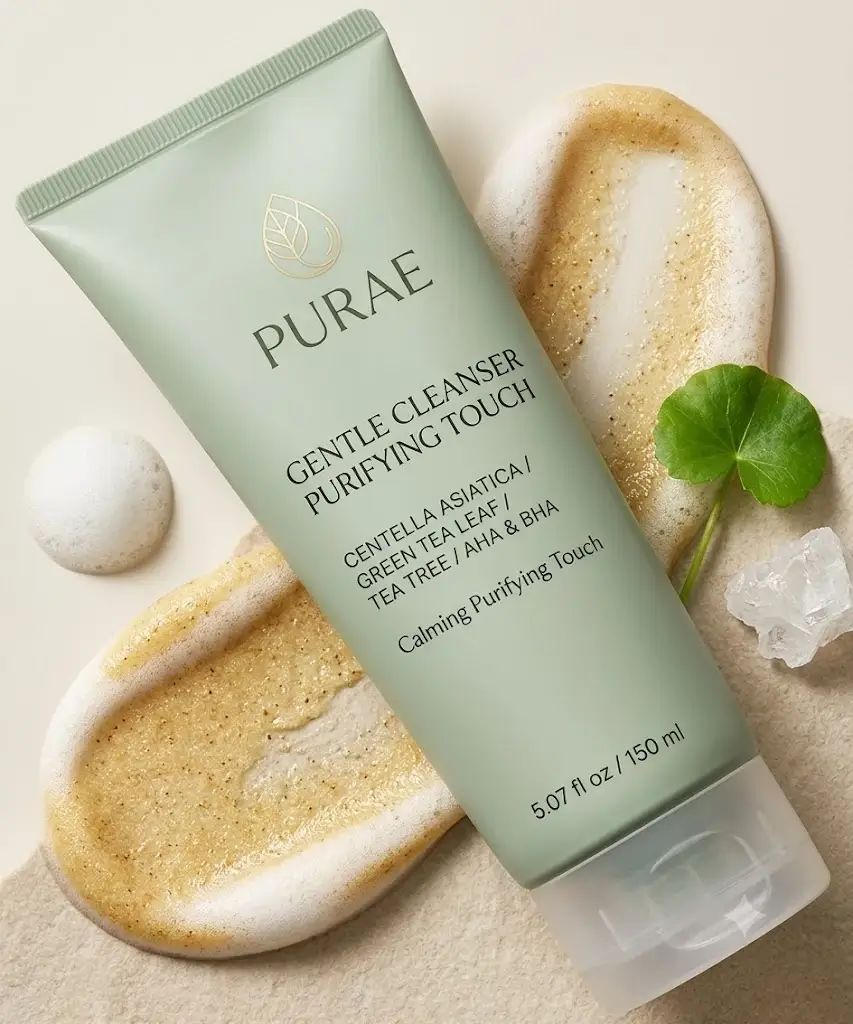
The Science of Cleansing Sensitive Skin
Your skin’s outermost layer, the stratum corneum, functions much like a brick wall. Skin cells act as the bricks, while natural lipids (ceramides, cholesterol, and fatty acids) serve as the mortar. Covering this structure is the acid mantle, a fine, slightly acidic film with an optimal pH between 4.7 and 5.5.
When you use harsh cleansers or traditional alkaline soaps (which often sit at a harsh pH of 9 to 10), you dissolve those essential mortar lipids and disrupt the acidic mantle. This creates micro-fissures in the barrier, allowing moisture to evaporate—a process known as transepidermal water loss (TEWL)—while letting external pollutants, bacteria, and allergens penetrate deep into the skin to cause inflammation.
A gentle cleanser formulated for sensitive skin works by utilizing ultra-mild cleansing agents that remove debris without disturbing the underlying lipid matrix or skewing skin pH.
Top Ingredients to Look For in a Sensitive Skin Cleanser
When building or choosing a cleanser formula for sensitive skin, ingredients generally fall into four key categories: mild surfactants, hydrating humectants, barrier-replenishing lipids, and soothing anti-inflammatories.
1. Ultra-Mild Surfactants (The Cleansers)
Surfactants are the active cleansing compounds that bond to oil and dirt on one end and water on the other, allowing impurities to rinse away. For sensitive skin, avoiding harsh sulfates is paramount. Look for non-ionic and amphoteric surfactants instead:
- Coco-Glucoside & Lauryl Glucoside: Derived from natural coconut and fruit sugars, these non-ionic surfactants are exceptionally gentle. They lift surface debris without penetrating or irritating the epidermal layer.
- Sodium Cocoyl Isethionate (SCI): Often called “baby foam” because of its extreme mildness, SCI is an coconut-derived surfactant that creates a soft, velvety lather without drying out reactive skin.
- Disodium Cocoyl Glutamate: An amino-acid-based surfactant that closely mimics the natural composition of human skin. It cleanses effectively while keeping the skin barrier intact and comfortable.
2. Hydrating Humectants (The Moisture Magnet)
Cleaners should never strip water out of your cells. Including humectants in a cleanser ensures skin draws in and retains hydration even while being washed:
- Glycerin: The ultimate gold-standard humectant. Glycerin pulls water from the environment into the outer skin layers. Studies show that cleansers enriched with high levels of glycerin significantly prevent post-cleansing dryness and barrier disruption.
- Panthenol (Pro-Vitamin B5): Panthenol acts as both a humectant and an emollient. It infuses deep hydration into skin cells, accelerates barrier recovery, and alleviates stinging or burning sensations.
- Sodium Hyaluronate / Hyaluronic Acid: A molecule capable of holding up to 1,000 times its weight in water. When present in a wash-off cleanser, it helps cushion the cleansing process and leaves a hydrating film behind.
3. Barrier-Replenishing Lipids & Emollients
Emollients smooth the skin surface and restore lost lipids during the wash process:
- Ceramides (Ceramide NP, AP, EOP): Ceramides make up roughly 50% of the skin barrier. Cleansers fortified with bio-identical ceramides help replenish missing lipids immediately, reinforcing the skin’s defense system as you cleanse.
- Squalane: A stable, lightweight oil derivative that mimics squalene—a lipid naturally produced by human sebaceous glands. Squalane softens rough texture without clogging pores or triggering breakouts.
- Sunflower Seed Oil (Helianthus Annuus): Rich in linoleic acid, a fatty acid that individuals with sensitive, eczema-prone skin often lack. It calms inflammation and supports natural repair.
4. Soothing & Anti-Inflammatory Actives
To actively reduce existing redness and calm reactive nerves, look for proven soothing botanical and synthetic agents:
- Colloidal Oatmeal: An FDA-recognized skin protectant packed with beta-glucans and avenanthramides (antioxidant compounds found exclusively in oats). It actively calms itching, redness, and irritation.
- Centella Asiatica (Cica / Madecassoside): A medicinal herb renowned in traditional Asian skincare. Cica contains triterpenoid compounds that suppress inflammatory responses, soothe redness, and promote cellular repair.
- Allantoin: Extracted from the comfrey plant, allantoin softens keratinized skin tissue, speeds up natural cell turnover, and calms micro-irritations.
- Bisabolol: The active soothing component extracted from chamomile. It effectively lowers pro-inflammatory cytokine activity without introducing natural fragrance allergens.
At-a-Glance: Key Ingredients & Their Roles
| Ingredient | Category | Primary Benefit for Sensitive Skin |
| Coco-Glucoside | Mild Surfactant | Gently lifts oil without stripping epidermal lipids |
| Glycerin | Humectant | Attracts water to prevent post-wash tightness |
| Ceramides | Barrier Lipid | Rebuilds the intercellular “mortar” to prevent water loss |
| Panthenol (B5) | Hydrator & Soother | Accelerates skin repair and reduces burning sensations |
| Colloidal Oatmeal | Anti-Inflammatory | Suppresses redness, itching, and inflammatory flare-ups |
| Squalane | Emollient | Mimics natural skin oils to smooth and protect texture |
Red-Flag Ingredients to Avoid
When shopping for sensitive skin, knowing what to leave out is just as vital as knowing what to include. Always double-check ingredient lists to ensure the absence of these common triggers:
Crucial Warning: “Unscented” is not the same as “Fragrance-Free.” Unscented products may contain masking fragrances to hide chemically unpleasant odors. Always look specifically for Fragrance-Free on the label.
- Sulfates (Sodium Lauryl Sulfate / SLS): Harsh ionic surfactants that denature skin proteins and strip away structural lipids, leading to immediate barrier failure.
- Synthetic Fragrances & Essential Oils: Synthetic perfumes as well as essential oils (like lavender, citrus, eucalyptus, linalool, and limonene) are among the leading causes of contact dermatitis and allergic reactions.
- Drying Alcohols (Alcohol Denat., Isopropyl Alcohol): These volatile alcohols break down skin lipids to create a light product feel, but they severely dehydrate and compromise sensitive skin barriers over time.
- Harsh Physical Scrub Beads: Walnut shell powder, sugar granules, or synthetic micro-beads create microscopic tears in an already delicate epidermis, triggering severe inflammation.
Best Practices for Cleansing Sensitive Skin
Even the most thoughtfully formulated cleanser can cause issues if applied incorrectly. Follow these evidence-based techniques to maximize results:
- Use Lukewarm Water Only: Hot water dissolves natural skin oils and expands surface capillaries, worsening redness. Cold water prevents thorough cleansing. Keep water near body temperature.
- Apply with Gentle Fingertip Pressure: Avoid rough washcloths, loofahs, or cleansing brushes. Use the pads of your fingers in circular motions for 30 to 60 seconds.
- Pat Dry, Don’t Rub: Gently press a soft, clean microfiber towel against your skin to absorb moisture. Leaving skin slightly damp before applying your moisturizer helps lock in maximum hydration.
- Always Patch Test: Before applying a new formula to your face, rub a small amount on your inner forearm or behind your ear once daily for 3 to 5 days to check for delayed allergic reactions.