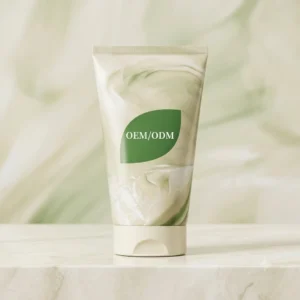
Choosing cleanser packaging is the decision most first-time skincare brands get wrong, because they treat it as a finishing step rather than a costing decision. Bottle, closure, pump and outer carton together typically account for 35-60% of landed unit cost on a 100 ml cleanser, which is more than the formula itself. On our line, private label facial cleanser projects run at a flexible / customizable MOQ, every project opens with a free sample, production sits inside an ISO 22716 and GMPC certified facility, and the standard lead time is 25-35 days. Send us the pack size and texture you are planning and we will return a written spec sheet with a quote within 24 hours.
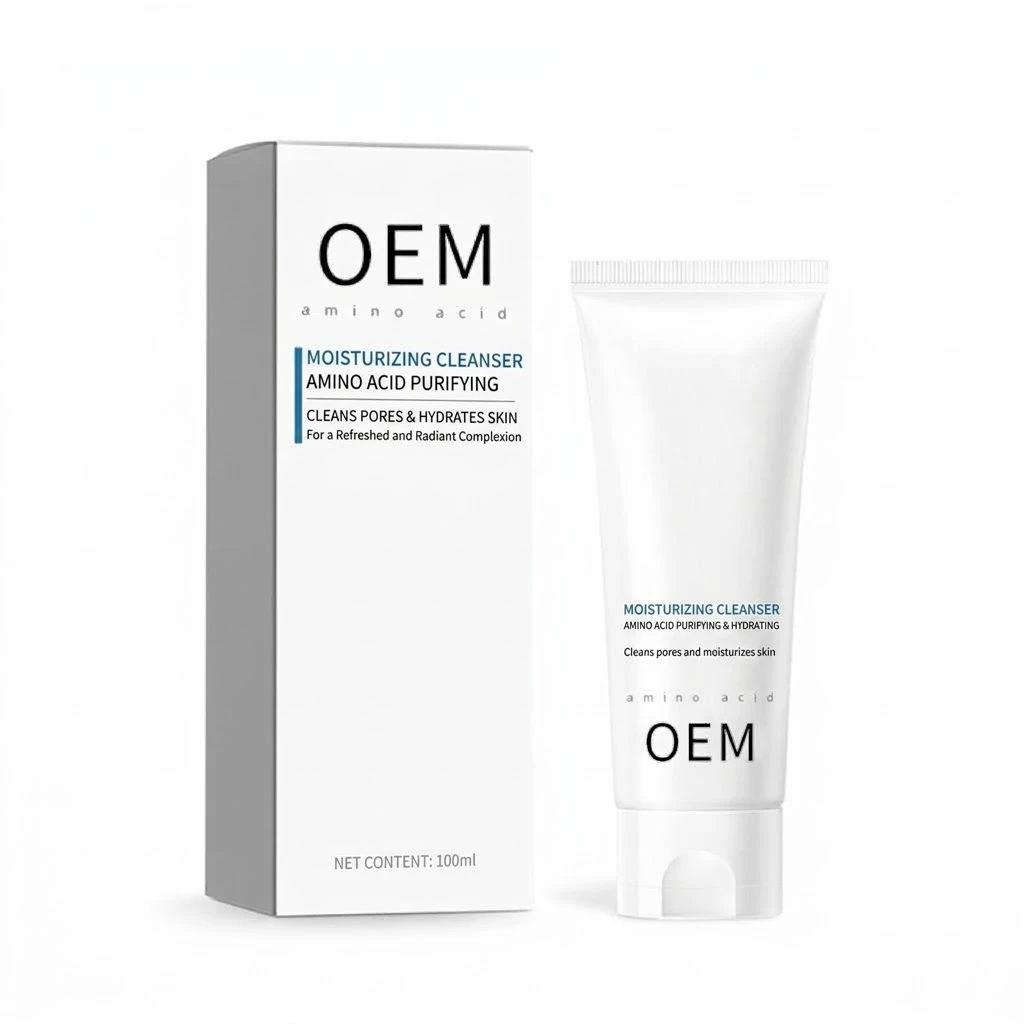
Why cleanser packaging drives your unit economics
On a 100 ml private label gel cleanser, the formula is frequently the cheapest part of the bill of materials. An amino-acid gel base might cost a few cents per unit at volume, while a custom airless pump bottle with a soft-touch sleeve can cost several times more. Because cleanser packaging is also the part your customer touches every single day, it carries disproportionate weight in repeat purchase: a pump that jams or a cap that slips reads as a cheap product no matter how good the formulation is.
Three variables decide most of your cost, and all three are decided at the brief stage rather than after artwork is done.
- Format – bottle, tube, airless pump, jar, or solid stick. Airless and foam-pump formats add cost but protect actives and support a higher perceived value.
- Decoration – screen print, hot stamping, tampo, sleeve labelling, or a full wrap-around shrink sleeve. Each additional process adds setup and cycle time.
- Closures and dispensing – flip-top, screw cap with insert, lotion pump, foam pump, or airless pump head.
If you are still comparing formats, our formulas page lists the base textures we manufacture against, which makes it easier to match the container to the formula instead of the other way around.
Container formats compared for private label cleansers
The table below is the short version. Each format has a clear best-fit, and picking the wrong one is the most common reason a first run needs to be reworked.
| Format | Typical fill | Best for | Watch out for |
|---|---|---|---|
| Airless pump bottle | 30-100 ml | Gel, ampoule-style serums, premium positioning | Higher unit cost; pump compatibility must be validated against the formula |
| Lotion / shower pump bottle | 150-300 ml | Foaming and gel cleansers for daily use | Pump output must match viscosity or you get weak lather |
| Soft tube | 75-150 ml | Travel sizes, face wash, controlled dosing | Tube laminate limits which actives you can use |
| Flip-top bottle | 100-200 ml | Mass-market face wash, lowest cost entry | Less premium on shelf; leakage risk if the closure gasket is poor |
| Wide-mouth jar | 100-200 ml | Cream cleansers, balms, sherbet textures | Higher surface-to-volume ratio, so air exposure matters more |
| Solid stick / cleansing bar | 50-100 g | Waterless lines, travel, eco-positioned products | Different production line and a different packing requirement |
Two of our standard bases show how format follows texture. The amino acid foam cleanser is built for a foam pump that produces a dry, airy lather at low output, while the calming gel cleanser suits an airless pump because the gel does not self-dispense from a flip-top.
Materials and formula compatibility
Compatibility is where cleanser packaging projects fail late, after tooling is committed. PET and PETG give clarity and chemical resistance and suit most water-based gels. HDPE is opaque, impact-resistant and cheaper, which makes it the default for larger foam and face wash fills. PP is used for closures and pump parts because it tolerates a broad pH range. Aluminium tubes are only appropriate for oil cleansers and anhydrous balms, since a water-based formula will corrode the laminate.
Before any tooling, we run a compatibility check: formula pH, solvent content, and storage temperature cycle against the intended polymer. This is part of our standard sample package, not a paid extra. It is the reason a project that starts with a written compatibility note rarely needs a second packaging run.
Pump, closure and dispensing systems
Dispensing is the smallest engineering decision with the biggest effect on reviews. A lotion pump that is rated for thin liquids will not draw a thick gel; a foam pump with a narrow bore will waste product and frustrate the user. We match the pump to the measured viscosity of your approved formula rather than to a generic catalogue entry.
For private label launches, a screw cap with a controlled-dose insert is often the smarter starting point than a pump: it costs less, has no moving parts to fail, and it is easier to switch later once you know your velocity. The best sellers page shows which combinations are currently moving fastest for brands at your stage.
Artwork, labelling and compliance
Artwork is the last chance to get the label right, and cleanser labels carry the strictest requirements of the whole range because most markets treat them as cosmetics but some product categories are regulated differently. At minimum your artwork needs the full ingredient list (INCI) in descending order, net content in both units used in your market, nominal fill, the responsible company address, a batch code and a period-after-opening symbol, plus any claim substantiation you rely on.
We supply print-ready artwork templates matched to the container you select, and we check the submitted file against the physical container before plate approval so that you do not discover a wrap-around error after a printing run has started.
How cleanser packaging affects MOQ and lead time
MOQ is flexible and customizable, but packaging components set the practical floor. Standard stock bottles and closures are usually held in our warehouse and can be released in smaller batches than a fully custom-printed component. The same rule applies to decoration: screen printing on a stock bottle needs a shorter setup than a fully custom mould.
Two practical levers shorten the timeline. First, approve a stock format for the first production run and move to a custom mould once you have proven velocity, which removes tooling time from your launch date. Second, consolidate your launch into fewer SKUs, because each additional pack size adds a separate packaging component to the critical path.
A realistic schedule looks like this: 3-5 days for the brief and compatibility check, 7-10 days for formula and packaging samples, artwork and print approval in parallel, then 25-35 days of production and filling, then transit. Our factory page documents the lines these runs go through.
Certifications and documentation
The facility operates under ISO 22716 (cosmetics good manufacturing practice) and GMPC, with in-house microbiology and stability testing. Every batch ships with a certificate of analysis and an MSDS, and we support the documentation requirements of destination markets including the EU and US rather than treating compliance as a post-shipment problem. Certification documentation is available on request before you place an order, so your regulatory team can review it during the sampling stage.
If you have an existing brief, our guide to choosing a facial cleanser manufacturer sets out the questions worth asking any factory before you commit, and our cost breakdown shows where packaging sits in the total landed price.
[FACTORY_PHOTO: packaging component store and filling line]
[CERT_IMAGE: ISO 22716 and GMPC certificates]
Frequently asked questions
What is the minimum order quantity for private label cleanser packaging?
MOQ is flexible and customized per format and decoration. Stock bottles with light decoration can run smaller than fully custom moulds. Send us your target volume and we will confirm what is achievable for your selected format.
Can I get packaging samples before ordering?
Yes. A free sample package covers both the formula base and the proposed container, and it also lets our team validate pump output against your approved viscosity.
How long does a private label cleanser run take end to end?
Plan on 25-35 days of production and filling after artwork approval, plus 7-10 days for sampling beforehand. If you need a launch date sooner, a stock format removes tooling from the schedule.
Can you match packaging to a formula I already have?
Yes. We run a compatibility check of pH, solvent content and temperature cycle against the proposed polymer before tooling, and we will tell you if a format is unsuitable.
Do you supply the pump or closure with the bottle?
Yes. Closures, pumps and inserts are specified and sourced as part of the same bill of materials so the whole pack ships as one unit and arrives matched to your batch.
Get a quote for your cleanser packaging
Tell us the format, fill size, target market and volume you are working with, and we will return a written specification sheet with a quote within 24 hours. MOQ stays flexible and customizable, sampling is free, and every run ships with a certificate of analysis, an MSDS and full batch records from an ISO 22716 and GMPC certified facility. Contact our export team to start.